
Are electric UTVs powerful enough for real work? Learn how torque, load capacity, range, and work patterns affect real-world electric UTV performance.
Electric UTVs are no longer a novelty. They’re showing up on farms, worksites, and large properties where utility vehicles are expected to haul loads, tow equipment, and operate day after day. Even so, power remains the biggest concern. Many buyers still question whether an electric UTV can genuinely replace a traditional gas-powered machine when real work is involved.
The short answer is yes, electric UTVs are powerful enough for real work, but that answer only holds when performance is understood in practical terms. Power delivery, load handling, range under load, and daily work patterns all matter more than headline figures.
This article looks at electric UTV performance beyond the hype, focusing on how these machines behave in real-world utility conditions.
What Does “Power” Mean in a UTV?
When people talk about power, they often default to horsepower. For utility vehicles, that’s rarely the most useful metric. What matters more is torque, and how that torque is delivered.
Electric motors deliver torque instantly, from a standstill. There’s no need to build RPM to access pulling power, which makes electric UTVs particularly effective for low-speed work. Tasks like starting under load, moving trailers, or climbing with weight onboard feel smooth and controlled rather than strained.
Electric power delivery tends to feel predictable. There’s no gear hunting, no lag, and no sudden surges. For utility work that prioritizes control over speed, that consistency is a genuine advantage.
Real-World Electric UTV Performance on the Job
In day-to-day use, electric UTVs perform best in the kinds of jobs most property owners actually do. Hauling tools, carrying feed, transporting fencing materials, and towing trailers at low speeds are all well within their comfort zone.
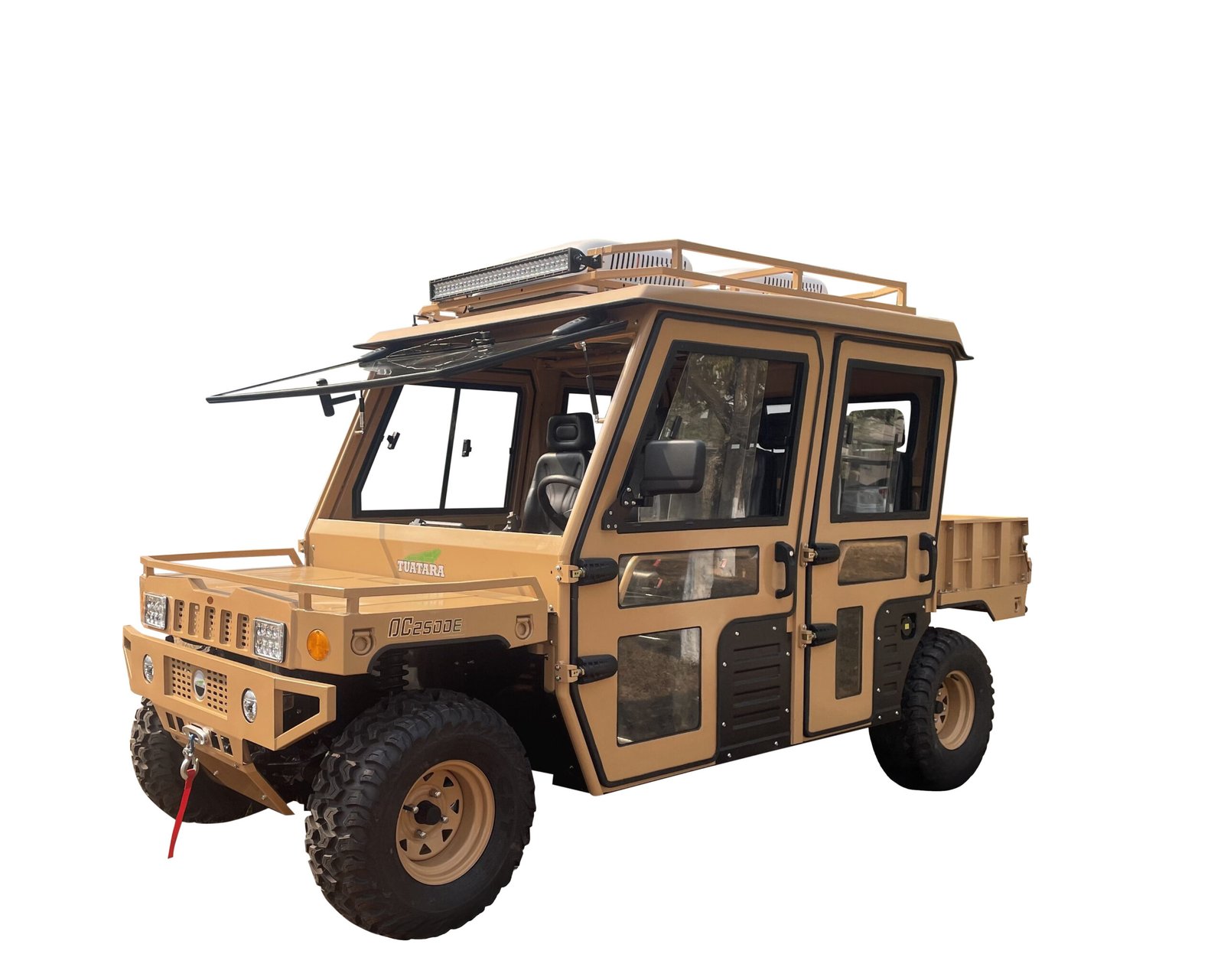
The Electric drivetrains of our 2500E UTV suit this type of work because torque is available immediately, making starts under load feel smooth and controlled. That predictability is reinforced by the practical control features, including selectable 2WD and 4WD, front and rear differential locks, and electric-assisted power steering. These systems help maintain traction and steering control when working on uneven ground, soft soil, or slopes.
Braking and downhill control are also important in real-world conditions. Hydraulic disc brakes with booster assist provide consistent stopping power, while regenerative braking adds controlled engine braking when descending, reducing reliance on the brakes and helping manage speed when loaded. Taken together, these characteristics make electric UTVs well-suited to steady, repeatable utility work, where control, traction, and consistency matter more than outright speed.
Load, Weight, and Duty Cycle Considerations
Load capacity figures are only useful when paired with an understanding of duty cycle. Carrying weight for short, planned runs is very different from towing heavy loads continuously for hours at a time.
Electric UTVs handle weight smoothly, but an added load does increase energy demand. Acceleration remains controlled, but range decreases as weight, terrain resistance, and driving intensity increase.
On the Tuatara 1500E, this translates into practical working limits: a cargo deck rated to carry up to approximately 1,200 pounds, and a maximum towing capacity of around 2,200 pounds for controlled utility tasks. Those figures place it firmly in the category of machines designed for real work. As with any electric platform, the key consideration is matching load size and duration to the expected work cycle, rather than treating maximum capacity as something to run continuously throughout the day.
What’s the Range Reality of Electric UTVs?
Range is often where electric UTV discussions lose credibility, either through exaggeration or oversimplification. Manufacturer range figures are typically measured under ideal conditions. Real work introduces variables.
For Tuatara electric UTVs, the working range is around 30-50 miles. However, that range will vary depending on:
- Load weight
- Terrain and gradients
- Driving style
- Frequency of stops and starts
Under heavier loads or on hilly ground, the usable range naturally decreases. The key point is that these changes are predictable, not sudden. Operators can plan around them, which is why electric UTVs perform best in environments with defined work patterns.
Charging, Downtime, and Workday Planning
Charging replaces refuelling, and that changes how workdays are structured. Electric UTVs are not designed for spontaneous, fuel-on-the-go operation. Instead, they fit best into operations where vehicles return to base regularly.
With rapid charging times of around 3.5 hours and support for opportunity charging, electric UTVs can often be topped up during natural downtime, between shifts, over lunch breaks, or overnight. For many properties, overnight charging alone is enough to cover a full day’s work.
So, Are Electric UTVs Powerful Enough for Real Work?
Yes, electric UTVs are powerful enough for real utility work, including hauling, towing, and daily operational tasks. Power delivery and torque are not the limiting factors. What matters most is how the vehicle is used. When workload, range, and charging are aligned with the job, electric UTVs perform reliably and efficiently.
Electric UTVs are not a compromise. They are simply a different tool, best used with a clear understanding of their operating pattern.
If you’re considering an electric UTV and want to know whether it suits your property or workload, talk with the team at Tuatara today.